
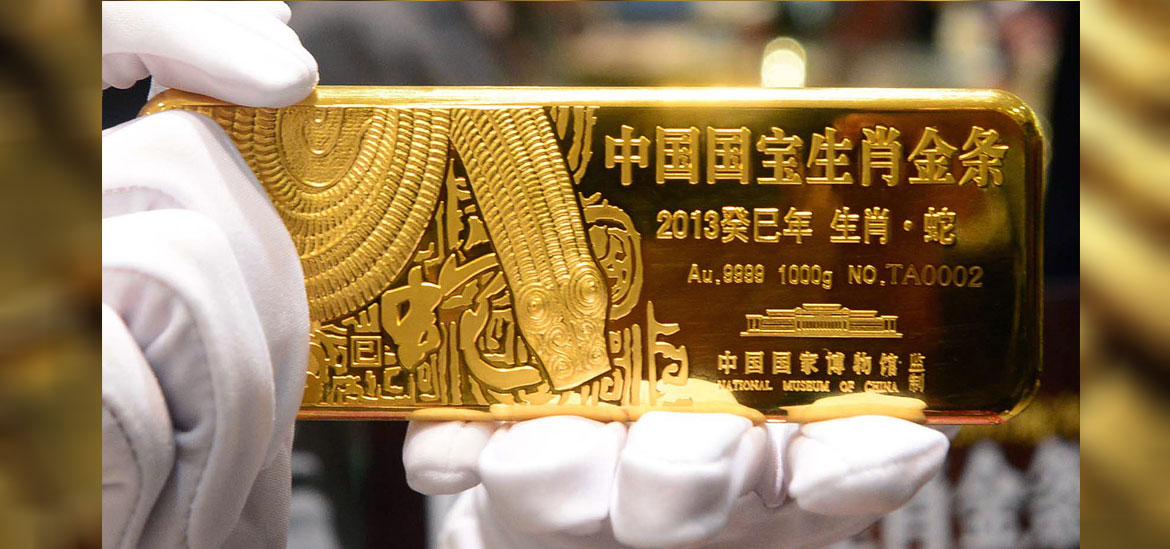
China’s growing appetite for gold is doing more than adding to the country’s reserves. It is also supporting Beijing’s longer-term effort to increase the use of the yuan in international trade and finance.
Hong Kong is becoming an important part of that effort. The territory is developing a yuan-denominated gold market that could allow more physical gold transactions to take place in renminbi rather than US dollars.
The yuan still accounts for only a small share of international transactions compared with the US dollar, and analysts do not expect that to change dramatically in the near term. But China’s continued gold purchases and Hong Kong’s development as a gold trading center are creating more opportunities for the currency to be used outside China.
Gold creates another route for the yuan
The challenge for any currency seeking a larger international role is finding more places where it can be used.
Gold provides one potential route. If a buyer receives yuan and can use it to purchase physical gold, the currency becomes useful beyond China’s domestic financial system.
Hong Kong confirmed plans last month to develop a yuan-denominated gold market. The territory also linked its gold vault with a facility in Shanghai last year, allowing international institutions in Hong Kong to receive physical gold through transactions denominated in yuan.
The Shanghai-linked vault currently has a capacity of around 150 tonnes. Over the next three years, Hong Kong plans to increase that capacity to more than 2,000 tonnes.
That would put the facility close to the size of China’s entire official gold reserves. If the expansion is completed, Hong Kong could become one of the world’s major gold trading centers.
Reducing dependence on the dollar
China’s gold accumulation is part of a wider effort to diversify its foreign exchange reserves and reduce its reliance on dollar-denominated assets.
China has bought gold for 23 consecutive months, reinforcing its position as a major official buyer. At the same time, Beijing has reduced its holdings of US Treasury securities and increased its allocation to gold and other reserve assets.
The strategy is partly linked to the experience of Russia, whose central bank assets held overseas were frozen following the invasion of Ukraine. The episode demonstrated how foreign-held reserves can become subject to restrictions during periods of geopolitical tension.
Gold held domestically is less exposed to restrictions imposed by another government.
China’s official gold reserves stood at more than 2,300 tonnes, compared with more than 8,100 tonnes held by the United States, according to World Gold Council figures for the second quarter.
The trend is not unique to China. Central banks in a number of emerging economies have increased their gold reserves since 2022, with Poland adding more tonnes than China over that period.
A gradual challenge to the dollar
China’s gold purchases are unlikely to displace the US dollar from its leading position in global finance in the short term. The dollar remains deeply embedded in international trade, financial markets and official reserves.
Gold accumulation can nevertheless reduce reliance on dollar-denominated assets over time.
For China, a larger domestic gold market also creates another channel through which the yuan can be used in international transactions. If Hong Kong succeeds in building significant trading volumes around yuan-denominated physical gold, it could give international institutions another reason to hold and use the currency.
China is also moving upstream
China’s strategy extends beyond financial markets. The country has acquired major gold mines across Latin America, Africa and Asia, giving it greater exposure to the physical supply of the metal.
The approach resembles China’s efforts in other strategic commodities, where securing access to raw materials complements the development of processing, trading and domestic markets.
That means China’s involvement in gold spans several parts of the supply chain, from mining and reserves to trading infrastructure.
Hong Kong’s progress will provide an important measure of how far the yuan’s role in the gold market can develop. The growth of its vault capacity, trading volumes and international participation will show whether yuan-denominated gold transactions can move beyond a domestic or regional market.
China is not about to replace the dollar through gold purchases alone. But continued reserve accumulation, investment in yuan-based gold infrastructure and greater control over physical supply are giving Beijing additional ways to expand the international use of its currency.
Return to News Page